Starlink Coverage Map: Understanding Global Internet Connectivity
July 8, 2024 · 4 min read
Introduction: Why the Starlink Coverage Map Matters
In an era where consistent internet connectivity underpins work, education, commerce, and safety, understanding the Starlink coverage map is essential for homeowners, businesses, and organizations that rely on uninterrupted service. Starlink, SpaceX's low Earth orbit (LEO) satellite network, is designed to deliver high-speed, low-latency internet to locations where fiber, cable, or fixed wireless are impractical. This guide explains how to read the Starlink coverage map, compares availability across U.S. states and urban vs. rural areas, offers practical tips for managing waitlists, and outlines enterprise-level coverage and deployment options.
How to Use the Interactive Starlink Coverage Map
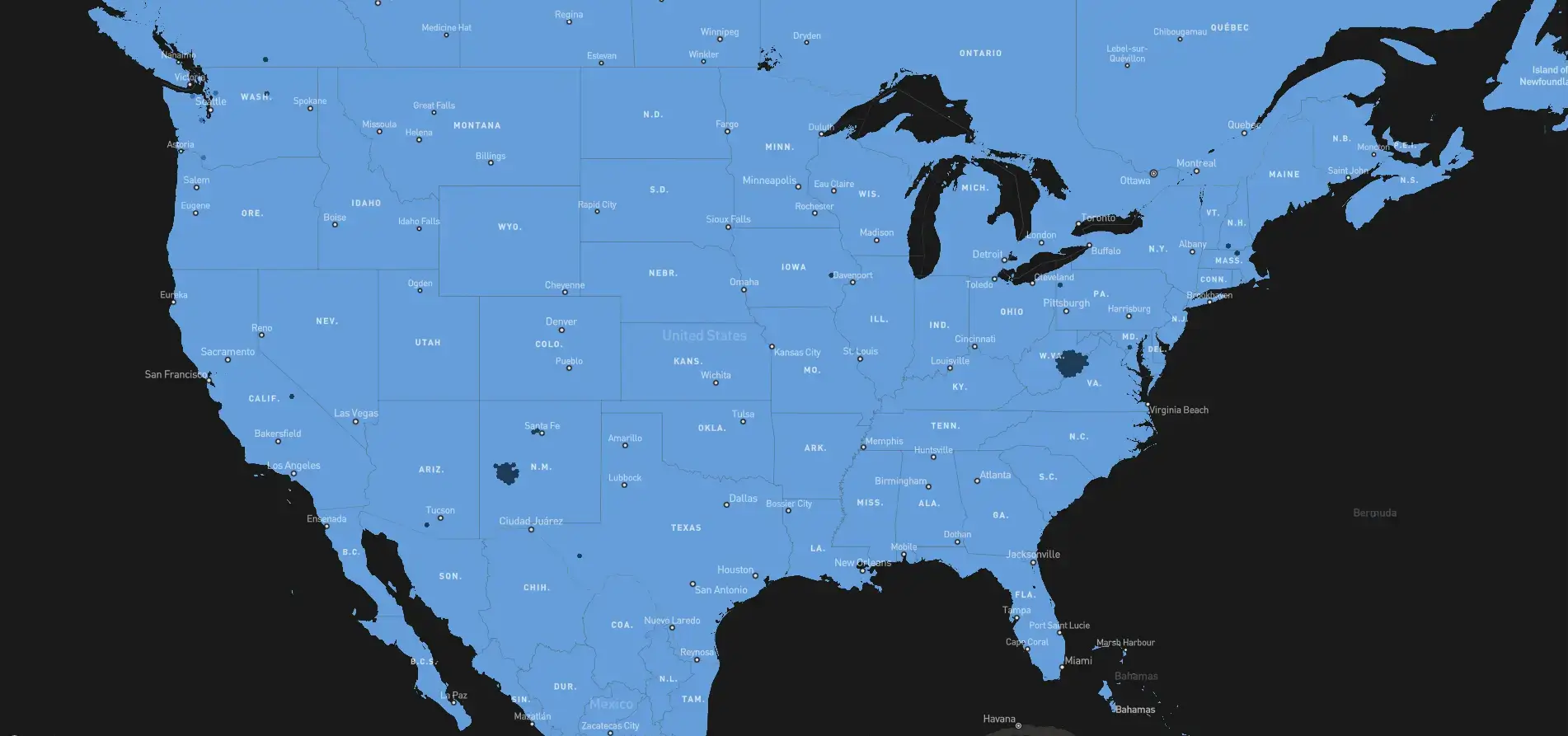
The Starlink interactive map (available at starlink.com/map) is the primary resource for checking real-time availability and planned expansion. Understanding the map's features helps you determine whether Starlink can serve your address now or in the near future.
- Search bar and address lookup: Enter an exact service address to see availability and any regional notes. For multi-property locations, test several addresses (e.g., a main house and an outbuilding) to identify the best installation site.
- Availability indicators: The map uses simple color coding or status tags such as “Available,” “Coming Soon,” “Service Unavailable,” and “Pre-order/Waitlist.” These reflect regulatory status, satellite coverage, and capacity planning for a location.
- Zoom and overlays: Zooming in shows more granular coverage boundaries. Overlays may indicate expected latency ranges and capacity constraints. In some regions, the map shows planned expansions based on upcoming launches or licensing approvals.
- Planned vs. active coverage: Pay attention to whether a highlighted area is actively supported (users can order and receive service immediately) or planned (you can join a waitlist or pre-order but will not receive service until a later date).
- Mobile vs. fixed service modes: Some map views allow you to toggle between residential/fixed coverage and mobile or maritime options. Different service tiers (Residential, Business, RV, Maritime, Aviation) may have distinct availability footprints.
Starlink Availability by State (U.S. Overview)
Starlink's rollout across the United States varies by state due to regulatory approvals, population density, and regional capacity planning. As of 2025, Starlink covers most states but with variable availability levels between metropolitan areas and remote locales.
- High availability states: Many states with higher population density and established regulatory frameworks—such as California, Texas, Florida, New York, and Washington—see widespread availability in both urban and rural pockets. Urban neighborhoods may be served quickly, though capacity constraints can occur in dense apartment complexes.
- Rural-centric states: States with large rural areas—such as Montana, Wyoming, North Dakota, and Idaho—often benefit significantly from Starlink because terrestrial broadband options are limited. Coverage in these states is prioritized for fixed residential and agricultural use, though some remote valleys or forested canyons remain challenging.
- Alaska and challenging geographies: Alaska is a prioritized region for Starlink due to its remote communities and lack of terrestrial infrastructure. Coverage is substantial for many communities but can vary by village depending on local terrain and licensing requirements.
- Regulatory or delayed states: A handful of states or territorial jurisdictions may experience slower deployments due to permitting or local regulatory issues. The Starlink map and sign-up page are the best sources for real-time state-level updates.
Tip: When checking state-level availability, always verify the specific service address on the interactive map. Coverage can change rapidly with new satellite launches and local approvals.
Rural vs. Urban Coverage: What to Expect
Starlink was initially marketed as a solution for rural and underserved areas—and it continues to be transformative for remote locations. However, differences between rural and urban coverage are important to understand.
- Rural advantages: In many rural areas, Starlink provides higher baseline speeds and lower latency than legacy satellite or DSL services. Because terrestrial options are limited, Starlink’s user terminals often face fewer capacity issues per cell, delivering consistent throughput for households, farms, and local businesses.
- Urban limitations: In densely populated urban centers, available bandwidth is split among more users per sector. Starlink has implemented capacity management and regional throttling in some metro areas to preserve quality of service, which can make performance more variable during peak hours. Multi-dwelling units (MDUs) may require professional planning for antenna placement to ensure unobstructed sky view.
- Obstruction sensitivity: Regardless of rural or urban setting, Starlink requires a clear view of the northern sky (for northern hemisphere installations) and minimal obstruction from trees, buildings, or terrain. Even small obstructions can cause signal drops; professional installations use pole mounts or masts to achieve optimal elevation.
Waitlist and Pre-Order Tips: Get Service Sooner
If your location shows “Coming Soon” or requires a waitlist entry, there are practical steps to improve your chances of earlier activation:
- Use the exact service address: When you sign up or pre-order, enter the precise physical address or GPS coordinates. Starlink plans capacity by specific addresses—incorrect or vague entries can delay provisioning.
- Add multiple eligible addresses: If you have access to an alternate nearby address (a second residence, farm building, or business site), test each address on the map. Some addresses within the same neighborhood may be activated earlier due to regional capacity allocations.
- Monitor the map frequently: Coverage zones update after satellite launches and ground-station rollouts. Checking weekly or subscribing to Starlink email updates increases your chance of noticing an opening quickly.
- Join local user groups: Community forums and local social media groups often share real-time activation experiences and workarounds (such as temporary mobile setups or using nearby service-ready locations).
- Work with an installer: Professional installers like InstallPros can help identify the best install site, submit accurate site data to Starlink, and coordinate deployments when service becomes available.
Enterprise Coverage and Use Cases
Enterprises, fleets, and organizations have different needs than residential users—higher throughput, service-level commitments, and tailored installations. Starlink offers several commercial and enterprise-grade products and deployment models to meet those needs.
- Starlink Business and Enterprise tiers: These tiers provide larger bandwidth allocations, dedicated hardware options, and higher priority in congestion events. They are suitable for remote branch offices, clinics, mines, and critical infrastructure.
- Maritime and mobility solutions: Starlink Maritime and Starlink for Aviation deliver connectivity for vessels and aircraft. These solutions include robust antennas, redundant hardware options, and installation packages designed for mobile platforms.
- Fleet and logistics: Commercial fleets increasingly use Starlink for vehicle-to-cloud telemetry, route optimization, and crew communications. Installations require hardened mounts, weatherproof enclosures, and integration with vehicle power systems.
- Remote and industrial sites: Remote oil & gas sites, mining operations, and research stations can deploy Starlink as primary or backup connectivity. Installations often include external enclosures, fiber handoffs, and integration with local networks and failover systems.
- Enterprise services and partnerships: Many enterprises opt for managed installations that include site surveys, network design, redundancy planning, and SLAs. Where required, InstallPros coordinates permitting, grounding, and on-site testing to ensure enterprise-grade performance.
Installation Considerations: Getting Reliable Performance
Proper installation is vital for reliable Starlink performance. Key considerations include unobstructed sky view, stable mounting, and professional routing of power and data cabling. Installations can be rooftop, pole-mounted, or on a ground pedestal depending on site conditions.
- Line of sight and elevation: Even though Starlink satellites move across the sky, a clear horizon without tree canopies or buildings is essential. Installers use elevation masks and mobile apps to model the optimal mount location.
- Mount selection and grounding: Use corrosion-resistant mounts and proper lightning grounding. Coastal or maritime environments require specialized materials and coatings.
- Network integration: For businesses, integrate Starlink into existing network architectures with failover, load balancing, and firewall configurations. Enterprise installs often include separate VLANs and QoS policies.
- Testing and optimization: Professional installers perform speed tests, latency validation, and stress tests under various conditions. They also run periodic checks post-install to address seasonal foliage or new obstructions.
Why Choose InstallPros?
InstallPros.io is the #1 Starlink installer in the USA, trusted for residential, enterprise, fleet, and remote site installations. Our team specializes in fast, reliable deployments that ensure you get the best possible performance from Starlink hardware and services.
- Residential installs: Professional roof, pole, and ground installations with neat cabling, grounding, and performance validation for homes and farms.
- Enterprise and remote site deployments: Managed projects for branch offices, critical infrastructure, mines, and remote research sites—complete with network integration and SLAs.
- Fleet and maritime solutions: Certified installations for vehicles, boats, and RVs—including weatherproof mounting, power integration, and mobility testing.
- Same-week scheduling: We prioritize rapid provisioning and can often schedule professional installations within the same week of service availability and equipment delivery.
- End-to-end service: Site surveys, permitting support, high-quality hardware mounts, post-install monitoring, and responsive support—so your connection stays online and optimized.
Choosing InstallPros ensures your Starlink service is installed to industry best practices, reducing downtime and maximizing throughput—whether you’re a homeowner, a business, or an enterprise with complex connectivity needs.
Conclusion
The Starlink coverage map is an evolving tool that reflects rapid satellite launches, regulatory changes, and capacity management. For many rural and remote users, Starlink is already a game-changer; for urban users and enterprises it offers a compelling alternative or redundancy option. Use the interactive map for precise address checks, follow best practices for waitlist management, and engage professional installers for complex or high-stakes deployments. With careful planning and the right installer, Starlink can deliver reliable broadband where traditional options fall short.
FAQ: Common Questions about Starlink Coverage
How accurate is the Starlink coverage map for my address?
The map is generally accurate for planning, but coverage can change with new satellite launches and ground-station deployments. Always enter your exact service address into the map and check periodically. For mission-critical installations, arrange a professional site survey with InstallPros to validate service and mount location.
Will Starlink work better in rural areas than in cities?
Starlink often provides significant gains in rural areas that lack broadband alternatives. In cities, performance may be subject to capacity limits and obstructions. Multi-dwelling units and dense neighborhoods may require specialized installs to ensure a clear view of the sky and adequate service quality.
How long is the waitlist and can I reduce my wait time?
Waitlist times vary by region and are influenced by capacity planning and licensing. To reduce wait time: enter the exact address, test nearby addresses, subscribe to Starlink updates, and use community channels for local intelligence. Working with InstallPros can streamline activation when slots open.
Does Starlink offer enterprise-grade solutions and SLAs?
Yes. Starlink provides business and commercial tiers tailored for higher throughput and enterprise use cases, including maritime and aviation solutions. For formal SLAs and managed services, businesses typically work with certified installers and integrators like InstallPros to design, deploy, and maintain robust, redundant systems.
What should I expect from a professional InstallPros Starlink installation?
InstallPros performs a full site survey, selects the optimal mount location, handles permits if required, professionally routes cabling and grounds equipment, and validates speeds and latency. We offer same-week scheduling for many areas and provide post-install support to keep your connection reliable.