Starlink Ground Station: Backbone of Satellite Internet
June 28, 2024 · 9 min read
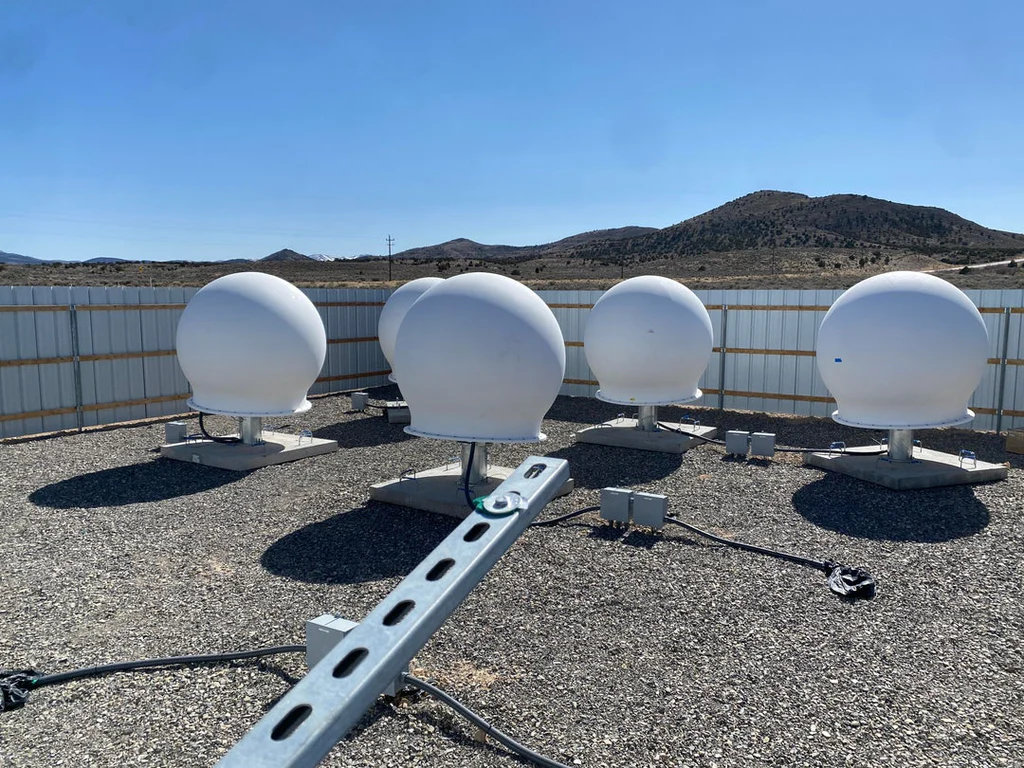
Starlink, the satellite internet constellation developed by SpaceX, has been making waves with its promise of high-speed internet access across the globe, especially in remote and underserved areas. While much of the attention has focused on the user terminals – the dishes that connect to the satellites – the ground stations, also known as gateways, play a crucial role in the network. These ground stations are pivotal in bridging the gap between the satellites in orbit and the terrestrial internet infrastructure.
In this article, we will delve into the details of Starlink ground stations, exploring their function, design, installation, and the technology that makes them the backbone of the Starlink satellite internet system.
What is a Starlink Ground Station?
A Starlink ground station, also referred to as a gateway, is a terrestrial relay station that communicates with the Starlink satellites orbiting the Earth. These stations are essential for the transmission of data between the satellites and the internet backbone on the ground. Essentially, they act as intermediaries, receiving data from the satellites and routing it to the appropriate internet networks, and vice versa.
Functions of a Ground Station
- Data Relay: Ground stations receive data from satellites and forward it to the internet backbone.
- Command and Control: They send commands to the satellites, ensuring proper operation and alignment.
- Network Management: They help manage the network traffic, ensuring smooth and efficient data flow.
Design and Technology of Ground Stations
Starlink ground stations are equipped with advanced technology to ensure efficient and reliable communication with the satellites. Here are some of the key components and technologies involved:
Antenna Arrays
Ground stations use large, phased-array antennas to communicate with multiple satellites simultaneously. These antennas can steer their beams electronically, allowing them to track the fast-moving satellites without physically moving the antenna.
Fiber Optic Connectivity
To handle the vast amounts of data transmitted, ground stations are connected to the internet backbone via high-speed fiber optic cables. This ensures low latency and high-speed data transfer between the satellites and the internet infrastructure.
Redundancy and Reliability
Ground stations are built with redundancy in mind. They have backup systems for power, communication, and data handling to ensure continuous operation even in case of equipment failure.
Installation of Starlink Ground Stations
Installing a Starlink ground station involves several steps and requires careful planning and execution. Here’s an overview of the process:
Site Selection
Choosing the right location for a ground station is crucial. The site needs to have clear skies for unobstructed satellite communication, and it should be near existing internet infrastructure for easy connectivity.
Construction and Setup
Once a site is selected, construction begins with building the necessary infrastructure, including antenna mounts, power supplies, and data centers. The antennas and other equipment are then installed and tested.
Testing and Calibration
After installation, the ground station undergoes rigorous testing and calibration to ensure it can communicate effectively with the satellites and handle the data traffic efficiently.
SpaceX’s Expansion Plans for Starlink Ground Stations (Updated 2026)
SpaceX continues to expand its Starlink ground station infrastructure as the constellation grows. As of early 2026, SpaceX operates over 170 Starlink ground stations worldwide, including operational, under-construction, and pending sites.
In the United States and its territories, SpaceX has received authorization for dozens of gateway locations across more than 40 states, as well as strategic territories such as Puerto Rico and Guam. These gateways connect directly to major fiber-optic internet backbones and regional data centers, forming the terrestrial core of the Starlink network.
Rather than relying on a fixed number of gateways, SpaceX now follows a dynamic expansion model, adding or upgrading stations based on network demand, regulatory approvals, and satellite generation upgrades.
Future Developments with Starlink V2 and Laser-Linked Satellites
Starlink’s second-generation (V2) satellites introduce inter-satellite laser links, allowing satellites to transmit data directly to one another in orbit. This significantly reduces dependence on nearby ground stations, especially over oceans, deserts, and polar regions.
Despite this advancement, ground stations remain essential, as they provide the final connection between the satellite network and the global internet backbone. Laser links primarily enhance routing efficiency, lower latency, and improve service reliability in remote areas.
E-band Capabilities for Enhanced Performance
SpaceX has received FCC authorization to upgrade and deploy multiple U.S. gateway sites with E-band (70–80 GHz) capabilities, designed specifically to support higher-capacity Starlink V2 and future satellites.
E-band gateways enable:
- Higher data throughput
- Improved uplink and downlink performance
- Better handling of dense user traffic
Several of these upgraded gateways are already operational, with additional sites scheduled as satellite capacity increases.
Highlight: Adelanto, California
Earlier this year, Adelanto Mayor Gabriel Reyes announced that SpaceX received permission to build a cutting-edge Starlink ground infrastructure in Adelanto, California, to support its second-generation Starlink satellites in orbit. These stations are expected to significantly enhance uplink and downlink speeds, promising a more seamless internet experience for users. The "Los Angeles Gateway Earth Station" facility is located west of Highway 395 and near El Mirage Road, and includes eight antennas, which are each 5-feet in diameter, according to the FCC filing.
Mayor Reyes highlighted the benefits of having the SpaceX facility in close proximity, stating, "Such proximity means that our residents will receive the quickest internet speeds from Starlink's internet offering, once launched." This facility marks another significant step in SpaceX's mission to provide faster and more widespread internet access via a low-orbiting satellite network.
Locations of Starlink Gateway Sites
The following list includes Starlink gateway locations that are operational, under construction, pending approval, or reported through public filings and industry tracking. Gateway status may change over time as SpaceX expands, upgrades, or consolidates infrastructure.
- Adelanto, California (construction ongoing)
- Anchorage, Alaska (live)
- Anderson, South Carolina (construction pending)
- Angola, Indiana (construction ongoing)
- Arbuckle, California (construction pending)
- Arlington, Oregon (construction pending)
- Arvin, California (construction pending)
- Atlanta, Georgia (construction pending)
- Baxley, Georgia (live)
- Beekmantown, New York (live)
- Bellingham, Washington (live)
- Benkelman, Nebraska (construction ongoing)
- Blountsville, Alabama (construction ongoing)
- Boca Chica, Texas (live)
- Boydton, Virginia (construction pending)
- Brewster, Washington (live)
- Broadview, Illinois (live)
- Brunswick, Maine (construction ongoing)
- Butte, Montana (live)
- Cass County, North Dakota (live)
- Charleston, Oregon (live)
- Charleston, South Carolina (construction pending)
- Cheyenne, Wyoming (construction pending)
- Clinton, Illinois (construction ongoing)
- Colburn, Idaho (live)
- Columbus, Ohio (unknown)
- Conrad, Montana (live)
- Des Moines, Iowa (construction pending)
- Dumas, Texas (live)
- Elbert, Colorado (live)
- Elkton, Maryland (unknown)
- Evanston, Wyoming (live)
- Fairbanks, Alaska (live)
- Fort Lauderdale, Florida (live)
- Frederick, Maryland (live)
- Gaffney, South Carolina (live)
- Greenville, Pennsylvania (live)
- Hamshire, Texas (live)
- Hawthorne, California (live)
- Hillman, Michigan (live)
- Hillsboro, Texas (live)
- Hitterdal, Minnesota (live)
- Inman, Kansas (live)
- Kalama, Washington (live)
- Kenansville, Florida (live)
- Ketchikan, Alaska (live)
- Kuparuk, Alaska (live)
- Lawrence, Kansas (live)
- Litchfield, Connecticut (live)
- Lockport, New York (live)
- Loring, Maine (live)
- Lunenberg, Vermont (live)
- Mandale, North Carolina (live)
- Manistique, Michigan (live)
- Marcell, Minnesota (live)
- Marshall, Texas (construction ongoing)
- McGregor, Texas (live)
- Merrillan, Wisconsin (live)
- Molokai, Hawaii (live)
- Mt Ayr, Indiana (live)
- Murrieta, California (construction pending)
- Nemaha, Nebraska (live)
- New Braunfels, Texas (live)
- Nome, Alaska (live)
- Norcross, Georgia (live)
- North Bend, Washington (construction pending)
- Olympia, Washington (construction pending)
- Panaca, Nevada (live)
- Port Matilda, Pennsylvania (construction ongoing)
- Prosser, Washington (live)
- Punta Gorda, Florida (live)
- Quincy, Washington (construction pending)
- Redmond, Washington (live)
- Richardson, Texas (construction pending)
- Roberts, Wisconsin (construction ongoing)
- Robbins, California (live)
- Robertsdale, Alabama (live)
- Rolette, North Dakota (live)
- Roll, Arizona (live)
- Romulus, New York (construction ongoing)
- San Antonio, Texas (construction pending)
- Sanderson, Texas (live)
- Savanna, Oklahoma (construction ongoing)
- Savannah, Tennessee (unknown)
- Sheffield, Illinois (construction ongoing)
- Slope County, North Dakota (live)
- Springer, Oklahoma (live)
- Sullivan, Maine (live)
- The Dalles, Oregon (construction pending)
- Tionesta, California (live)
- Tracy City, Tennessee (live)
- Unalaska, Alaska (live, as reported by TESMANIAN today)
- Vernon, Utah (live)
- Warren, Missouri (live)
- Wichita Falls, Texas (construction pending)
- Wise, North Carolina (live)
- York, Pennsylvania (construction pending)
- Puerto Rico (unknown)
- Guam (unknown)
Current Facts and Figures About Starlink (2026)
- Number of Satellites: Approximately 9,500+ operational satellites in Low Earth Orbit
- Global Coverage: Active service on all continents, including maritime and aviation markets
- Subscribers: Several million users worldwide (exact figures not publicly disclosed by SpaceX)
- Internet Speeds: Typical download speeds range from 100 Mbps to over 250 Mbps, with lower latency as the network matures
- Latency: Commonly 20–40 ms, with continued improvements expected from Gen2 and Gen3 satellites
Custom Mounting Solutions by InstallPros
Given the complexity and importance of ground stations, their installation often requires customized solutions. This is where InstallPros come in. They specialize in providing tailored installation services, ensuring that each ground station is optimally set up for maximum performance.
Expertise and Experience
InstallPros have extensive experience in installing ground stations, understanding the specific requirements and challenges involved. They use their expertise to provide solutions that meet the unique needs of each site.
Customized Mounting Solutions
From designing and building custom mounts for antennas to setting up data centers and power supplies, InstallPros offer comprehensive solutions tailored to the specific needs of each ground station.
Ongoing Support and Maintenance
After installation, they provide ongoing support and maintenance to ensure the ground stations continue to operate smoothly and efficiently.
Conclusion
Starlink ground stations are a foundational component of SpaceX’s satellite internet ecosystem, enabling high-speed, low-latency communication between orbiting satellites and terrestrial networks. While laser-linked satellites reduce reliance on local gateways, ground stations remain indispensable for global connectivity.
As Starlink deploys next-generation satellites and expands its terrestrial infrastructure, these gateways will continue to evolve in capacity, technology, and strategic importance. With specialized installation and maintenance partners such as InstallPros, Starlink ground stations are built to meet the demands of one of the most ambitious internet networks ever deployed.
FAQs
1. What is the role of a Starlink ground station?
A Starlink ground station acts as an intermediary between the satellites and the internet backbone, relaying data and managing network traffic.
2. How many Starlink ground stations are there?
Currently, SpaceX operates approximately 170+ Starlink ground stations globally, including live sites, stations under construction, and approved future locations. This number continues to increase as Starlink expands into new regions and upgrades capacity for next-generation satellites.
3. What technology is used in Starlink ground stations?
Starlink ground stations use phased-array antennas, fiber optic connectivity, and redundant systems to ensure reliable and efficient operation.
4. Why is site selection important for ground stations?
Site selection is crucial to ensure clear satellite communication and proximity to existing internet infrastructure for efficient data transfer.
5. What services do InstallPros offer for ground stations?
InstallPros provide customized mounting solutions, construction, setup, testing, calibration, and ongoing maintenance and support for ground stations.