Understanding the Size of Starlink Satellites
June 25, 2024 · 3 min read
Introduction
Starlink, the satellite internet constellation project developed by SpaceX, aims to deliver high‑speed, low‑latency internet to underserved and remote locations worldwide. While much of the public attention focuses on launch cadence and ground terminals, the physical size and design of each Starlink satellite directly impact performance, launch economics, and constellation scaling. This guide breaks down the known specifications of Starlink’s current satellites (commonly referred to as V1/Gen1), explains the planned Gen2 (V2) improvements, and compares constellation size, orbit altitudes, and what those differences mean for users and installers.
Specifications of Starlink Satellites (Gen1 / V1)
SpaceX’s first-generation Starlink satellites were designed for mass production, ease of launch, and efficient operation in low Earth orbit (LEO). The most commonly cited specifications for these operational satellites are:
- Dimensions: Roughly 2.8 meters (9.2 feet) long, about 1.4 meters (4.6 feet) wide, and approximately 0.2 meters (0.7 feet) thick in their stowed configuration.
- Mass: Approximately 260 kilograms (around 573 pounds) per satellite.
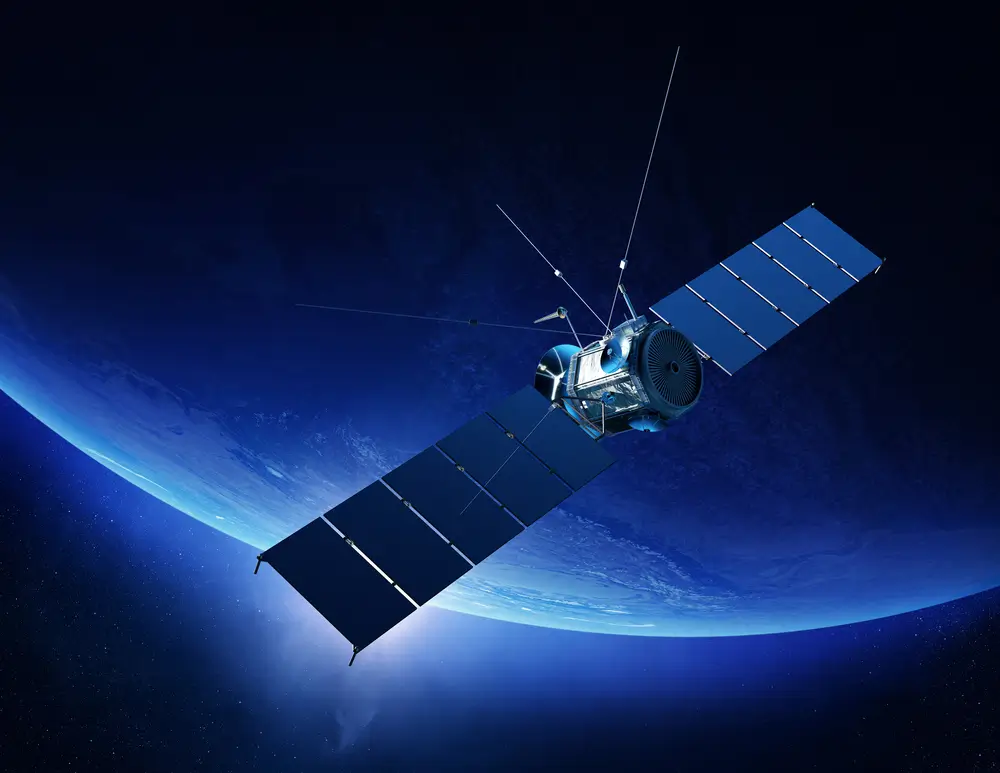
- Solar Array: A single deployable solar array that extends the satellite’s span; the deployed panel is commonly reported to be on the order of 8 meters (26 feet) in length.
- Communications: High‑performance phased‑array antennas used for downlink/uplink to user terminals and ground stations. Many Gen1 satellites also include optical inter‑satellite links (laser terminals) in later builds.
- Propulsion: Krypton‑fed Hall‑effect ion thrusters used for orbit raising, station keeping, collision avoidance maneuvers, and controlled deorbiting at end of life.
These specifications emphasize compactness and manufacturability—key to launching dozens per Falcon 9 mission and building out a dense LEO network rapidly.
What the Size Enables
- High launch density: Small, relatively light satellites allow a single Falcon 9 to carry up to 60 satellites in early missions, reducing the per‑satellite launch cost.
- Rapid production: The compact form factor supports an assembly‑line approach in SpaceX’s facilities, enabling frequent replenishment of the constellation.
- Flexible deployment: Smaller satellites permit deployment into multiple orbital shells and allow for staggered replacement strategies.
V1 vs. V2: What Changed and Why It Matters
“V1” (Gen1) refers to the operational satellites described above. SpaceX has publicly discussed and filed plans for a next‑generation “V2” (Gen2) satellite family that aims to dramatically increase bandwidth per satellite, improve spectral efficiency, and expand service capability (including to higher latitudes and more demanding enterprise applications). Key differences and considerations include:
Size and Mass
Gen1 (V1): As noted, roughly 260 kg per unit. Gen1 satellites are optimized for mass production and low per‑unit launch cost.
Gen2 (V2): SpaceX has indicated Gen2 satellites will be substantially larger and more capable than Gen1. Public filings and statements describe a much greater power and payload capacity—meaning larger structures, bigger solar arrays, and heavier mass. While exact mass figures for Gen2 vary in public communications, the design intent is clearly to increase per‑satellite throughput meaningfully compared with Gen1.
Power and Solar Arrays
Gen1: Single deployable solar array (~8 meters long) provides enough power for Gen1 communications and propulsion subsystems.
Gen2: Expect multiple or much larger deployable arrays, higher wattage output, and possibly segmented deployables to support larger transmit/receive arrays and more powerful onboard electronics. The larger arrays directly enable higher downlink capacity, broader spot beams, and support for more advanced inter‑satellite laser links.
Antennas and Throughput
Gen1: Phased‑array antennas enable electronic beam steering and support many user terminals across spot beams. Over time, SpaceX also integrated laser interconnects into many Gen1 builds.
Gen2: More, larger, or higher‑gain phased arrays are expected. Gen2 satellites are designed to carry more user capacity per satellite, expand available bandwidth in higher frequency bands, and offer more robust enterprise and backhaul services.
Orbit and Mission Profiles
Gen1 satellites operate in multiple LEO shells (commonly around 340–570 km for many operational shells), designed for lower latency and simplified deorbiting at end of life. Gen2 satellites could operate in additional shells and might include higher altitude options for improved coverage footprint per satellite; higher altitudes trade a bit more latency for wider coverage per unit.
Takeaway
Gen2 is not a simple incremental update—it's a strategic shift toward fewer but far more capable satellites that can deliver significantly higher network capacity and support new service classes. For installers and customers, that translates to improved coverage options, potentially higher bandwidth tiers, and new enterprise capabilities over time.
Orbit Altitude, Coverage, and Constellation Size Comparison
Orbit altitude and constellation size are closely linked to latency, coverage, and overall system capacity.
- Orbit Altitude (Gen1): Many Gen1 satellites operate in LEO shells around roughly 340 km up to about 570 km. These lower altitudes provide very low round‑trip latency (typically 20–50 ms for many users) because the signal path to space is short. The lower altitude also simplifies end‑of‑life atmospheric reentry.
- Orbit Altitude (Gen2): Gen2 may include satellites operating at higher LEO altitudes (and potentially higher shells) to increase footprint per satellite. A higher orbit increases per‑satellite coverage area but slightly increases latency; SpaceX designs aim to balance these tradeoffs for optimized service levels.
- Constellation Size (Gen1): SpaceX initially secured regulatory approval for a multi‑thousand satellite constellation (commonly cited authorizations include an initial authorization of ~12,000 satellites and subsequent filings seeking authorization for additional satellites). As of mid‑2024, several thousand Gen1 satellites had been launched and were operational—enough to provide service in many regions.
- Constellation Size (Gen2): Gen2 filings envision expanding total satellite counts—potentially into the tens of thousands across different generations and orbital shells—to increase capacity worldwide. The exact roll‑out timing will depend on production, launch cadence, and regulatory approvals.
In plain terms: Gen1 focused on rapid deployment of many small satellites to establish global coverage. Gen2 focuses on higher per‑satellite capacity and efficiency, which can reduce the number of satellites needed for a given throughput target while enabling higher service tiers.
How Size and Orbit Affect Performance for End Users
Physical satellite design choices translate into tangible user outcomes:
- Latency: Lower orbits (Gen1) minimize latency—critical for gaming, voice/video calls, and interactive applications. Higher orbits slightly increase latency, but optimized routing and inter‑satellite links help mitigate impact.
- Throughput and Bandwidth: Larger satellites (Gen2) with bigger solar arrays and higher‑gain antennas can deliver more aggregate bandwidth per satellite, improving peak speeds and capacity during busy periods.
- Coverage Density: Smaller satellites allow many satellites to cover the same area with overlapping spot beams, increasing available capacity in populated regions. Conversely, larger satellites cover more area per satellite but may be better for rural or maritime coverage where density is lower.
- Reliability and Redundancy: A denser constellation of smaller satellites provides natural redundancy: if one satellite goes offline, others in the mesh can pick up the load. Gen2 is expected to combine that redundancy with higher per‑satellite capability.
Implications for Installers and Site Planning
For installers—especially those deploying Starlink at residential, enterprise, fleet, and remote sites—the evolving satellite designs affect planning in a few ways:
- Terminal Expectations: User terminal hardware continues to be compact, but new service tiers may require higher‑grade terminals or multi‑unit solutions for enterprise or backhaul applications.
- Service Levels: Gen2 will enable additional service levels; installers should be prepared to advise customers on projected performance differences and available commercial plans as Gen2 rolls out.
- Future‑proofing: Installations should account for potential upgrades in terminal firmware or alternate mounting solutions for higher throughput or multi‑antenna setups.
Why Choose InstallPros?
InstallPros.io is the #1 Starlink installer in the USA, trusted by homeowners, businesses, fleets, and remote site operators. Our team combines deep technical expertise with local, on‑the‑ground service to deliver reliable, professional Starlink deployments.
- Residential installations: Roof, pole, or ground mounts optimized for maximum signal visibility and minimal aesthetic impact.
- Enterprise deployments: Multi‑terminal site planning, redundancy design, and traffic shaping for business continuity and high‑availability needs.
- Fleet and mobile installations: Vehicle and vessel mounting solutions engineered for continuous connectivity on the move.
- Remote site installations: Off‑grid power integration, ruggedized mounts, and environmental protection for harsh conditions.
- Fast scheduling: We offer same‑week scheduling in many regions so your connectivity is online quickly—with professional testing and documentation at handover.
Whether you need a single residential dish or a complex multi‑site enterprise rollout, InstallPros combines certified installers, professional project management, and ongoing support to maximize the value of your Starlink service.
FAQs
How big are Starlink satellites and how much do they weigh?
Current Gen1 Starlink satellites are compact: roughly 2.8 m × 1.4 m × 0.2 m in stowed configuration and weigh about 260 kg. Deployed, the single solar array commonly extends the satellite span to about 8 meters. Gen2 satellites are planned to be substantially larger and heavier to support greater power and throughput, though exact production figures vary as the program develops.
At what altitude do Starlink satellites operate and why does that matter?
Gen1 satellites typically operate in low Earth orbit, commonly around 340–570 km in altitude depending on the orbital shell. Lower altitudes yield lower latency and easier deorbiting at end of life. Gen2 satellites may operate in additional or higher LEO shells to provide broader coverage per satellite, trading a small increase in latency for greater footprint and capacity.
How many satellites are in the Starlink constellation and will Gen2 change that?
SpaceX initially received regulatory approval for several thousand satellites and later filed for many more—culminating in authorizations that could total tens of thousands across generations. As of mid‑2024, several thousand Gen1 satellites had been launched and were serving customers. Gen2 is intended to increase per‑satellite capacity and may change the optimum mix of satellite count versus capability, but overall network capacity will expand as Gen2 is deployed.
Do larger satellites mean better internet for customers?
Larger Gen2 satellites are designed to deliver higher throughput per satellite, which can translate into improved speeds and more consistent performance—especially for enterprise backhaul and high‑capacity applications. However, network performance also depends on constellation density, ground station infrastructure, and user terminal capabilities. For many residential customers, Gen1 already provides significant improvements over traditional rural options, and Gen2 will expand available service tiers.
Can InstallPros help me prepare for Gen2 and future upgrades?
Yes. InstallPros designs installations with future upgrades in mind—assessing placement, power provisioning, and mounting flexibility so your site can accommodate new terminals or service changes as Starlink evolves.
For a professional assessment or to schedule a same‑week installation, contact InstallPros.io—our team will evaluate your needs and recommend the best Starlink solution for your location and use case.