Why You Should Install Starlink in the Beechcraft King Air Series
April 11, 2024 · 3 min read
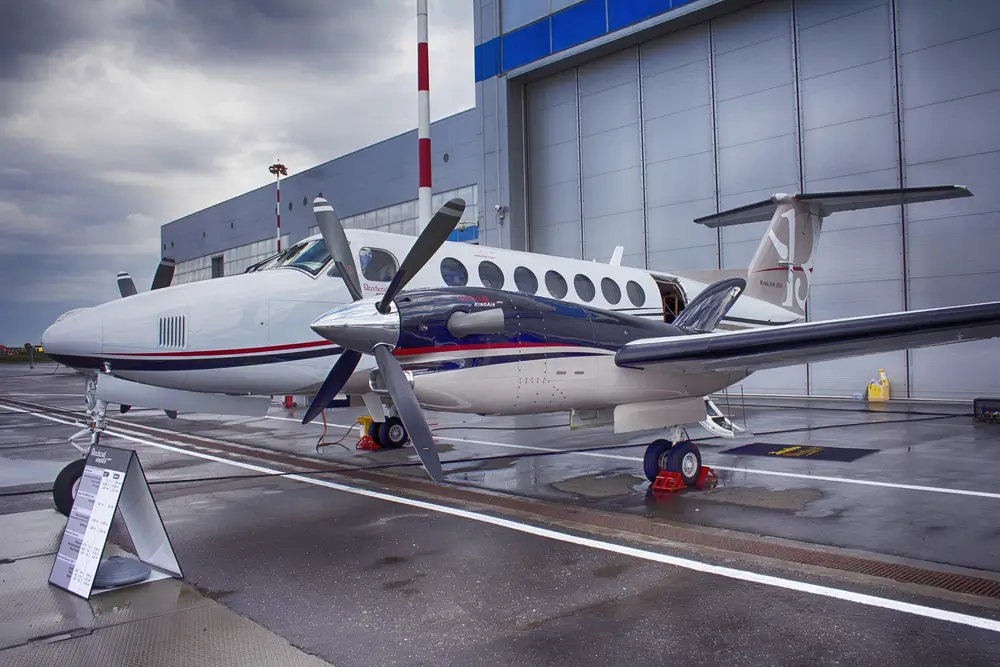
The Beechcraft King Air series—spanning the 90, 100, 200, 300 and 350 variants—remains one of the most versatile turboprops in civilian and utility operations. For operators who require reliable, high-speed connectivity in-flight, installing Starlink can be a transformative upgrade. This guide covers the full aviation installation process, FAA and regulatory considerations, optimal antenna placement on King Air airframes, competing airborne connectivity solutions, and why InstallPros.io is the best partner for your Starlink integration.
Why Starlink for the King Air Series?
Starlink’s low Earth orbit (LEO) constellation delivers high throughput, low latency, and broad geographic coverage—attributes that align well with King Air missions: business charters, medevac, utility inspections, and operations to remote airfields. With Starlink, crews and passengers can run video conferences, upload mission-critical data, stream telemetry for remote operations, and maintain constant contact with ground dispatch. For operations that rely on near-real-time data (weather updates, telemedicine, telemetry), Starlink is a meaningful step up from legacy GEO and some L-band solutions.
FAA and Regulatory Considerations
Installing a satellite internet system in an aircraft is not merely an avionics swap; it is an aircraft modification that involves regulatory oversight. Key points to consider:
- STC vs. Field Approval: A Supplemental Type Certificate (STC) is the preferred route for a major modification that affects airworthiness. If an STC already exists for a specific Starlink aviation installation on a given King Air model, the installation process is simplified. If not, integration typically requires coordination with an FAA Designated Engineering Representative (DER) and the local FSDO for a field approval or a project-specific STC.
- Part 23/25 Compliance and Documentation: All design changes and placards, wiring diagrams, and installation instructions must be documented according to 14 CFR requirements. The work should be performed by an FAA-certified repair station or A&P mechanic under the appropriate quality control procedures.
- Electromagnetic Interference (EMI) and Environmental Testing: Aviation installations must meet relevant DO-160 environmental and EMI/EMC standards. Power transients, lightning protection, and RF interference with existing avionics require mitigation and verification.
- Operational Rules: Depending on the operator’s certificate (Part 91, 135, or 145), there are differences in maintenance and inspection obligations. Commercial operators should ensure their manuals and MEL procedures are updated to reflect the new equipment.
- Frequency and International Operations: While Starlink operates primarily under SpaceX regulatory approvals, operators should ensure compliance with international overflight rules and any required permissions for special RF operations in specific jurisdictions.
Pre-Installation Assessment
Every King Air installation should begin with a thorough assessment performed by a qualified avionics integrator. Key elements include:
- Identify the specific King Air model and structural considerations (wing configuration, pylon locations, pressurized cabin routing across bulkheads).
- Determine existing avionics racks and available space for Starlink’s modem/power units and any necessary power conditioning equipment.
- Review weight and balance impacts and update the aircraft logbook and weight/balance records.
- Check for existing STCs or approved data for similar satellite systems to expedite certification.
Antenna Placement: Best Practices for King Air Airframes
Antenna placement is one of the most critical decisions in the installation because performance depends on an unobstructed hemispherical view of the sky and mechanical robustness. Consider these placement options and trade-offs:
- Dorsal Mount (Top-Fuselage): Often the optimal choice for visibility and minimal obstruction. Dorsal mounts give a superior sky view for high-elevation satellites and reduce signal blockage due to wing or engine nacelle shadowing. Structural reinforcement may be required and the installation must account for the King Air’s T-tail or fin geometry on some models.
- Belly Mount: May be used when upper fuselage access is limited. Belly installations increase exposure to debris and propwash, and they can add drag; careful aerodynamic fairing design and FAA-approved mounting hardware are necessary.
- Tailcone or Rear Fuselage: For some King Air variants, a rear fuselage mount behind the cabin can work if it provides an unobstructed sky view and the T-tail does not shadow the antenna. Structural considerations and cable routing through pressure bulkheads must be addressed.
- Window or Cabin-Mounted Solutions: These are typically used for portable units. They avoid structural work but are not ideal for sustained in-flight operations or commercial use, as certification is limited and they may not meet EMI/EMC requirements for installed equipment.
Key considerations when selecting the site: clear line-of-sight to the sky, minimal electromagnetic coupling with existing antennas, robust mechanical attachment points, and practical cable routing paths that respect pressure seals and structural members.
Power, Wiring, and Avionics Integration
Starlink aviation hardware requires reliable DC power and integration into the aircraft’s power distribution while meeting aviation transient and isolation standards. Typical integration steps:
- Install dedicated circuit protection (circuit breakers and fusing) sized for startup inrush and continuous load.
- Use aviation-grade power converters and EMI filters to meet DO-160 conducted and radiated emissions requirements.
- Route data and power cabling with proper shielding, bonding, and separation from critical flight instrument wiring to prevent RF coupling.
- Integrate Starlink’s router with the aircraft local area network (LAN). Configure network segmentation (VLANs), secure Wi‑Fi SSIDs for passengers vs. crew, VPN requirements, and firewall rules to protect avionics and flight systems.
- Document power draw for all operating modes, and update aircraft manuals and MEL as required.
Step-by-Step Installation Guide
A standard installation workflow typically follows these phases:
- Survey & Quotation: Site visit, measurements, photos, and a written plan that includes structural reinforcement and cable paths.
- Engineering & Certification Planning: STC review or DER engagement, load calculations, lightning and bonding strategy, and EMI mitigation plans.
- Structural Work & Mount Installation: Cutout/lamination if required, reinforcement plate installation, and waterproof sealing for external mounts.
- Cabling & Avionics Integration: Run shielded cables, install power conditioning, integrate with cabin network, and secure all components to aviation standards.
- Functional and EMI Testing: Ground RF checks, network throughput testing, and DO-160 style checks for emissions where applicable.
- Flight Test & Certification Sign-Off: In-flight performance validation, STC or field approval completion, documentation and logbook updates.
- Training & Handover: Crew training on system operation, preflight checks, and maintenance intervals.
Competing Solutions and How Starlink Compares
Operators should evaluate the full connectivity landscape before committing. Major competing solutions include:
- Inmarsat (SwiftBroadband): Reliable L-band service with global coverage but limited bandwidth and higher latency compared to LEO options.
- Viasat: High-throughput GEO Ka/Ku services with established aviation certification. Good bandwidth in many regions but higher latency and limited polar coverage.
- Iridium Certus: Global narrowband/medium-band LEO service optimized for safety and low-data telemetry—excellent coverage but limited peak speeds for full internet usage.
- Gogo (Air-to-Ground & 2Ku/ATG): Ground-based networks provide strong performance in the U.S. and parts of Europe but have limited range and dependence on terrestrial infrastructure.
- Other LEO Providers (OneWeb, O3b mPOWER): Emerging alternatives offering competitive throughput and lower latency; however, certification status and commercial aviation availability vary.
Starlink’s strengths are speed and latency typical of modern LEO constellations, with the trade-offs being evolving certification pathways and a variable commercial pricing structure. For many King Air operators, Starlink represents an optimal balance of speed, coverage, and cost.
Operational Considerations and Maintenance
Once installed, operational policies should be put in place:
- Preflight checks for antenna integrity and network health.
- Software update procedures and version control—coordinate with InstallPros for managed updates.
- Scheduled inspections for mount seals, cable chafe, and corrosion protection.
- Contingency routing—retain legacy voice/data options for safety-critical comms.
Why Choose InstallPros?
InstallPros.io is the #1 Starlink installer in the USA for good reason. We specialize in aviation-grade integrations across residential, enterprise, fleet, and remote site installations. Our core advantages:
- Proven Aviation Expertise: Extensive hands-on experience with King Air models and a track record of FAA-compliant modifications.
- Full-Spectrum Services: From STC navigation and DER coordination to structural mounts, power conditioning, and cabin network integration.
- Fleet and Remote Site Capability: We manage one-off installations and multi-aircraft fleet rollouts, plus remote base stations for expeditionary operations.
- Same-Week Scheduling: Our operational tempo and nationwide network of certified technicians let us often schedule installations the same week you call.
- Post-Installation Support: Ongoing maintenance packages, software management, and 24/7 support for mission-critical operations.
If you want a fast, safe, and compliant Starlink installation for your King Air, InstallPros.io is ready to plan and execute the entire program with minimal aircraft downtime.
Conclusion
Installing Starlink in a Beechcraft King Air offers a significant upgrade in connectivity, enabling real-time operations, improved passenger experience, and operational efficiencies. The process requires disciplined engineering, FAA coordination, and aviation-grade installation practices—areas where InstallPros excels. Whether you operate a single aircraft or a fleet, a Starlink integration can future-proof your operations and deliver the speeds and coverage needed for modern missions.
FAQ — Frequently Asked Questions
Do I need an STC to install Starlink on my King Air?
In most cases, a permanent, externally mounted Starlink installation will be considered a major alteration and will require either an existing STC for that airframe/mount combination or a DER/FSDO-approved field approval or project STC. InstallPros will evaluate the airframe configuration and recommend the correct certification path.
How long does a typical installation take?
Installation duration depends on the scope. A simple in-cabin or portable setup can be completed in a day, while a full external mount with structural reinforcement, power conditioning, and certification typically requires 2–5 days of shop time plus engineering and flight-test scheduling. InstallPros provides realistic timelines during the initial survey.
Will Starlink interfere with my avionics?
Properly engineered installations mitigate RF interference through shielding, grounding, and separation. Installed systems must meet EMI/EMC criteria; InstallPros performs required testing and mitigation to ensure no adverse interference with navigation, comms, or instrumentation.
Can Starlink be used on the ground and in-flight worldwide?
Starlink provides global and near-global coverage that continues to expand. Ground and in-flight operation is generally available but depends on the specific Starlink product, regulatory approvals, and regional restrictions. InstallPros will advise on operational limitations for planned routes and international operations.
What ongoing maintenance is required?
Routine inspections of mounts, seals, and cable runs are recommended, plus monitoring software updates and periodic functional tests. InstallPros offers maintenance plans and remote monitoring options to keep your system mission-ready.
To schedule an assessment or request a quote for Starlink installation on your Beechcraft King Air, visit InstallPros.io or contact our aviation sales team for same-week scheduling and expert assistance.